-
-
W-199-E, MIDC Khairne, Thane Belapur Road, Navi Mumbai – 400705. India.
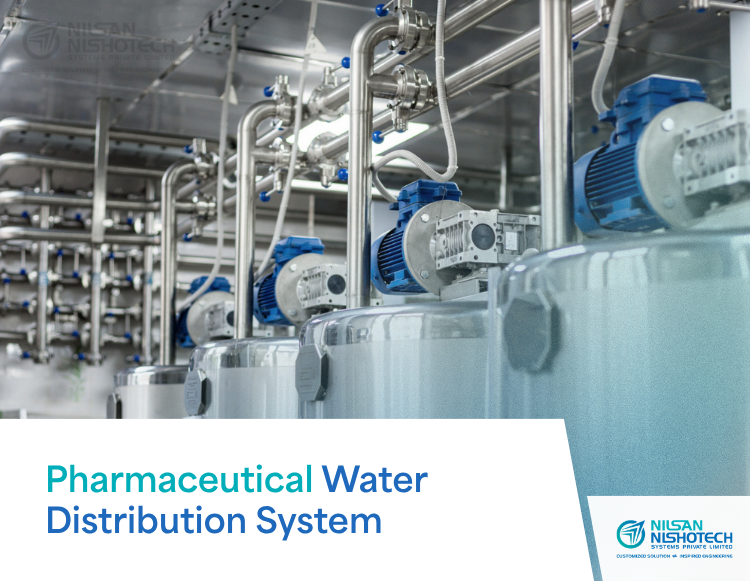
Pharmaceutical Water Distribution System: Design, Sanitization & Common Mistakes
23 Jul 2026
Pharmaceutical Water Distribution System: Design, Sanitization & Common Mistakes
A Pharmaceutical Water Distribution System is the backbone of every pharmaceutical water treatment facility. While generating purified water is essential, maintaining its quality during storage and distribution is equally critical. A poorly designed distribution loop can lead to microbial contamination, biofilm formation, product quality issues, and regulatory non-compliance. An efficient water loop design, combined with proper sanitization practices and preventive maintenance, helps ensure that purified water reaches every point of use without compromising quality. This guide explains the fundamentals of pharmaceutical water distribution systems, best design practices, sanitization methods, and common mistakes manufacturers should avoid.
What Is a Pharmaceutical Water Distribution System?
A Pharmaceutical Water Distribution System is a closed-loop network that stores and continuously circulates purified water or Water for Injection (WFI) from the generation unit to multiple points of use within a pharmaceutical facility.
The system is designed to preserve water quality by preventing microbial growth, minimizing stagnation, and maintaining the required temperature and flow conditions. It plays a crucial role in ensuring compliance with GMP, WHO, USFDA, and international pharmacopeia standards.
Key Elements of an Effective Water Loop Design
A reliable Water Loop Design is built to maintain consistent water quality throughout the distribution process.
Continuous Water Circulation
Continuous circulation prevents stagnant water, reducing the risk of microbial contamination and maintaining system integrity.
Hygienic Piping Design
Using stainless steel piping with orbital welding and minimizing dead legs helps maintain sanitary conditions throughout the loop.
Controlled Flow Velocity
Maintaining the correct flow velocity discourages bacterial growth and ensures efficient water movement across the entire system.
Automated Monitoring
Modern systems monitor conductivity, temperature, pressure, and flow in real time, allowing operators to identify deviations quickly.
Why Sanitization Is Essential
Sanitization is a critical process that keeps the distribution system free from microbial contamination and extends equipment life.
Common Sanitization Methods
- Hot water sanitization
- Ozone sanitization
- Chemical sanitization
- Steam sanitization
The appropriate method depends on system design, water quality requirements, and operational needs.
Biofilm Prevention Best Practices
Biofilm is one of the biggest threats to pharmaceutical water quality because microorganisms can attach to pipe surfaces and become difficult to eliminate.
Best Practices Include
- Maintain continuous water circulation.
- Eliminate dead legs in piping.
- Perform scheduled sanitization.
- Monitor microbial levels regularly.
- Validate system performance periodically.
A proactive maintenance strategy significantly reduces contamination risks and supports long-term regulatory compliance.
Common Mistakes in Pharmaceutical Water Distribution Systems
Even advanced facilities can experience performance issues due to avoidable design or operational errors.
Mistakes to Avoid
- Poor piping layout causing water stagnation
- Oversized distribution loops
- Inadequate sanitization schedules
- Lack of routine monitoring
- Delayed preventive maintenance
- Improper validation documentation
- Ignoring temperature and flow control
Addressing these issues early helps improve system reliability and reduce operational downtime.
How Nilsan Nishotech Delivers Reliable Water Distribution Solutions
Nilsan Nishotech designs advanced Pharmaceutical Water Distribution Systems that prioritize hygienic engineering, operational efficiency, and regulatory compliance. From customized loop design and automated monitoring to validated sanitization solutions, every system is developed to maintain consistent water quality while supporting pharmaceutical manufacturing requirements.
With expertise in Purified Water (PW), Water for Injection (WFI), storage, and distribution systems, Nilsan Nishotech helps pharmaceutical companies build reliable, future-ready water infrastructure.
Conclusion
A well-designed Pharmaceutical Water Distribution System is essential for maintaining water quality from generation to every point of use. Proper water loop design, effective sanitization, and strong biofilm prevention practices reduce contamination risks, improve operational efficiency, and support GMP compliance. Choosing an experienced solution provider like Nilsan Nishotech ensures your pharmaceutical facility benefits from reliable, validated, and high-performance water distribution systems that meet the demands of modern manufacturing.
FAQs
What is a Pharmaceutical Water Distribution System?
It is a closed-loop system that stores and circulates pharmaceutical-grade water while maintaining its quality.
Why is continuous circulation important?
Continuous circulation prevents water stagnation and minimizes microbial growth.
What causes biofilm in pharmaceutical water systems?
Biofilm forms when microorganisms attach to pipe surfaces due to stagnant water or poor sanitization.
Which material is commonly used for pharmaceutical water loops?
Electropolished SS316L stainless steel is widely used for hygienic pharmaceutical applications.
How is a pharmaceutical water loop sanitized?
It can be sanitized using hot water, ozone, steam, or approved chemical methods.
What is a dead leg in a water distribution loop?
A dead leg is an unused section of piping where water stagnates and microorganisms can grow.
How often should a pharmaceutical water distribution system be validated?
Validation should be performed during commissioning and reviewed periodically according to GMP requirements.
Why choose Nilsan Nishotech for pharmaceutical water distribution systems?
Nilsan Nishotech provides customized, GMP-compliant water distribution solutions with advanced engineering, validation support, and long-term reliability.