-
-
W-199-E, MIDC Khairne, Thane Belapur Road, Navi Mumbai – 400705. India.
What Do Inspectors Look for in High-Purity Water Systems for Pharma and Biopharma?
24 Aug 2026
What Do Inspectors Look for in High-Purity Water Systems for Pharma and Biopharma?
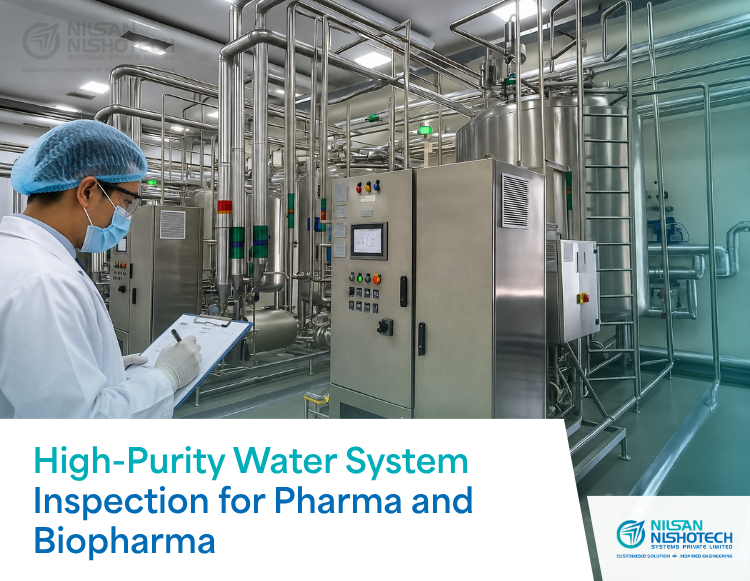
Pharmaceutical water system inspection is an important part of maintaining quality, consistency, and GMP readiness in the pharmaceutical and biopharma industries. During an inspection, regulators may assess how a high-purity water system is designed, operated, monitored, maintained, and controlled. The focus is not limited to the final water quality. Inspectors may also evaluate whether the complete system consistently performs as intended and whether supporting records demonstrate effective control.
For pharmaceutical and biopharma manufacturers, a well-managed high-purity water system should be supported by sound engineering, documented procedures, effective monitoring, and appropriate quality controls.
What Is a High-Purity Water System for Pharma and Biopharma?
A high-purity water system provides controlled-quality water for pharmaceutical and biopharmaceutical manufacturing, cleaning, laboratory activities, and other defined applications.
Depending on the process and intended use, pharmaceutical facilities may use different grades of high-purity water. Regardless of the water grade, the system should be appropriately designed and maintained so that water quality remains controlled from generation through storage, distribution, and point of use.
In both pharmaceutical and biopharma manufacturing, the complete water system should be considered as one connected process rather than evaluating individual components separately.
What Do Inspectors Check During a High-Purity Water System Inspection?
During a pharmaceutical water system inspection, inspectors may review whether the system remains under control and whether documented information accurately reflects actual operations. Important areas can include system design, monitoring, sampling, validation, maintenance, documentation, and change management.
1. High-Purity Water System Design
System design is an important inspection consideration. Inspectors may review current system drawings and compare documented information with the physical installation.
They may examine:
- Piping configuration
- Distribution-loop design
- Sampling points
- Points of use
- Drainability
- Potential stagnant areas
- Equipment condition
- Hygienic design
- System modifications
A system should be designed to support consistent water quality and minimize conditions that may increase contamination risk.
2. Water Generation and Quality Control
Inspectors may review how the facility produces and controls high-purity water for its intended pharmaceutical or biopharmaceutical application.
The review may include:
- Defined operating parameters
- Water-quality specifications
- Monitoring procedures
- Treatment-stage performance
- Operating records
- Deviation history
- Investigation records
The objective is to determine whether the system consistently produces water suitable for its intended use.
3. Storage and Distribution
Maintaining water quality after generation is equally important. Inspectors may assess storage tanks and distribution arrangements to determine whether the system supports controlled water quality throughout the facility.
Areas of review can include:
- Storage conditions
- Circulation
- Temperature control where applicable
- Distribution-loop configuration
- Sanitization practices
- Points of use
- Sampling locations
The storage and distribution system should be designed and operated to minimize opportunities for deterioration in water quality.
4. Monitoring and Sampling
A reliable high-purity water system monitoring program defines what is monitored, where samples are collected, how frequently testing is performed, and how results are evaluated.
Depending on the system and its intended application, facilities may monitor parameters such as:
- Conductivity
- TOC
- Temperature
- Flow
- Pressure
- Microbiological quality
- Other defined quality attributes
Inspectors may also examine alert and action levels, sampling plans, investigation procedures, and historical trends.
Why Is Trend Monitoring Important? A single test result provides limited information about long-term system behavior. Reviewing trends can help identify gradual changes that may require investigation.
What Happens When a Result Exceeds an Established Limit? An excursion should be assessed through the facility's established investigation and quality procedures. The evaluation should consider the result, system history, potential impact, and relevant manufacturing activities.
Why Is Documentation Important? Documentation provides evidence of how the system has been operated, monitored, maintained, and controlled over time. Consistent and traceable records help demonstrate that the system remains within its established state of control.
5. Validation and Qualification
Validation and qualification are major considerations for pharmaceutical and biopharma water systems.
Inspectors may review evidence demonstrating that the system is suitable for its intended application and consistently performs according to defined requirements.
Records may include:
- Qualification documentation
- Validation protocols and reports
- Acceptance criteria
- Monitoring strategies
- Sampling plans
- Supporting technical documentation
The specific validation approach should be appropriate to the system, intended use, and applicable quality requirements.
6. Maintenance, Calibration and Change Control
Inspection readiness continues throughout the operational life of the system.
Inspectors may review:
- Preventive maintenance records
- Corrective maintenance history
- Instrument calibration
- Deviations
- Change-control records
- Investigation reports
- System modification history
Changes to a high-purity water system should be appropriately assessed, documented, and managed to ensure that the system remains in a controlled state.
How Can Pharma and Biopharma Facilities Prepare for Inspection?
Regular internal review can help pharmaceutical and biopharma organizations identify potential gaps before an external inspection.
Facilities should periodically verify that:
- Current drawings reflect the installed system.
- Sampling points are clearly defined.
- Monitoring data are reviewed and trended.
- Alert and action levels are documented.
- Deviations are investigated appropriately.
- Maintenance records are complete.
- Calibration records are current.
- Sanitization procedures are followed.
- System changes are properly assessed and documented.
A structured self-inspection approach can help organizations maintain continuous inspection readiness.
What Makes a High-Purity Water System Inspection-Ready?
An inspection-ready system is not simply one that produces acceptable water at the time of testing. It should demonstrate consistent control across its complete operating lifecycle.
That means the pharmaceutical and biopharma industries should be able to demonstrate a clear connection between:
System Design → Operation → Monitoring → Investigation → Maintenance → Documentation → Ongoing Control
This lifecycle approach helps provide confidence that high-purity water quality is consistently maintained.
How Nilsan Nishotech Supports High-Purity Water Systems
Nilsan Nishotech focuses on high-purity water systems for demanding applications in the pharmaceutical and biopharma industries.
A reliable high-purity water system requires careful attention to water quality, storage, distribution, monitoring, sanitization, automation, documentation, and long-term system performance. Each element should work together to support the specific process requirements of the manufacturing facility.
For pharmaceutical and biopharmaceutical manufacturers, the objective is to maintain consistent high-purity water quality while supporting operational reliability and inspection readiness.
Frequently Asked Questions
What do inspectors look for in a pharmaceutical high-purity water system?
Inspectors may review system design, water quality, storage and distribution, monitoring, sampling, validation, maintenance, calibration, documentation, deviations, and change control.
Why is high-purity water important in the biopharma industry?
High-purity water can be critical to manufacturing, cleaning, laboratory, and other controlled processes. Maintaining consistent water quality is essential to the intended application.
What parameters are commonly monitored?
Depending on the system and application, monitoring may include conductivity, TOC, temperature, flow, pressure, and microbiological quality.
Why are water-system trends reviewed?
Trending can help identify gradual changes in system performance that may not be obvious from a single test result.
How can a facility prepare for a water-system inspection?
Regular self-inspection, accurate documentation, effective monitoring, current maintenance and calibration records, appropriate validation, and controlled system changes can support inspection readiness.
Conclusion
A pharmaceutical water system inspection evaluates much more than the quality of water produced on a particular day. For the pharmaceutical and biopharma industries, inspectors may look at the complete high-purity water system, including design, operation, monitoring, sampling, validation, maintenance, documentation, and ongoing control.
The strongest approach is to maintain a high-purity water system that performs consistently and has clear, traceable evidence supporting its state of control.
Nilsan Nishotech supports pharmaceutical and biopharmaceutical organizations with high-purity water-system solutions focused on quality, reliability, and application-specific requirements.
For high-purity water system solutions for pharmaceutical and biopharma applications, contact Nilsan Nishotech at info@nilsan-nishotech.com.